


Something clicks during the third week of Stanford’s CS 123 course when a student builds a four-legged robot by hand and it takes its first wobbly steps across a lab floor. Not in the robot. within the pupil. It’s the kind of moment that is difficult to create in a lecture hall and most likely impossible to duplicate using a textbook.
Formally named “A Hands-On Introduction to Building AI-Enabled Robots,” the course requires students to build Pupper, a small quadruped robot, using only a starter kit. No prior knowledge of robotics is necessary. Only rudimentary programming knowledge and, presumably, a desire to spend ten weeks getting to know neural networks and servo motors. In its third year, the course has developed into something of a campus cult elective, the kind that students discuss in dining halls and bring up years after graduation.
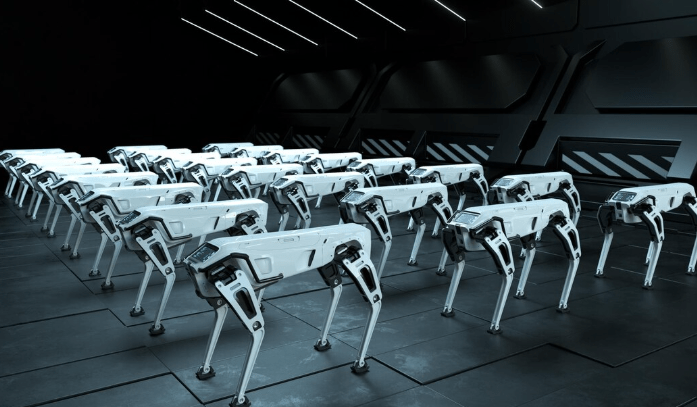
It’s not just the novelty of creating a robot dog that makes it work. Every lab session is infused with this philosophy. The course was created by Google DeepMind researcher Jie Tan, Stanford computer science professor Karen Liu, and instructor Stuart Bowers, a former Tesla executive currently employed at Apple. Together, they think that students can only develop true engineering fluency when they are confronted with physical reality, such as malfunctioning wiring, misbehaving motors, or code that stops a robot in its tracks. Liu has stated, “We believe that the best way to help and inspire students to become robotics experts is to have them build a robot from scratch,” and based on the way the course is organized, this belief permeates every task.
There’s something wonderfully ridiculous about the first few weeks. Each lab session, such as “Wiggle Your Big Toe,” takes students through a different layer of the stack, such as basic locomotion, sensor integration, and motor calibration. It’s possible that the whimsical naming was done on purpose to lessen the intimidating nature of the technical terrain. Either way, it appears to be effective.
The emphasis switches to intelligence by week five. In order to teach Pupper to improve its gait, identify objects, or react to spoken commands, students start training tiny neural networks. Some teams even go so far as to build a seven-joint arm to enable their robot to retrieve objects; another installed a toy water cannon and programmed a miniature firefighter. Students seem to view the robot as a canvas rather than a project once they grasp the hardware.
There is an obvious ancestor of the course. Stanford Doggo, a tenacious four-legged creature capable of trotting, jumping three and a half feet into the air, and performing a backflip on padding, was created in 2019 by a group of Stanford undergraduates in the Student Robotics club. It demonstrated that advanced legged robotics didn’t require a research budget and cost less than $3,000. Pupper is a more sophisticated and competent offspring of that same spirit, and there’s something fulfilling about that lineage—a student’s passion project turning into a formal academic sequence, its lessons building over time.
In front of guests from NVIDIA and Google, students demonstrated Puppers that could navigate campus mazes, give tour guide monologues, and mimic emergency response at the final showcase this past spring. Though it seems almost irrelevant, it’s still unclear if any of those demonstrations will result in research collaborations or employment offers. More than any one technical skill, the course results in a student who has actually created something that moves, thinks, and reacts to the outside world. It’s not as common as it seems.
