


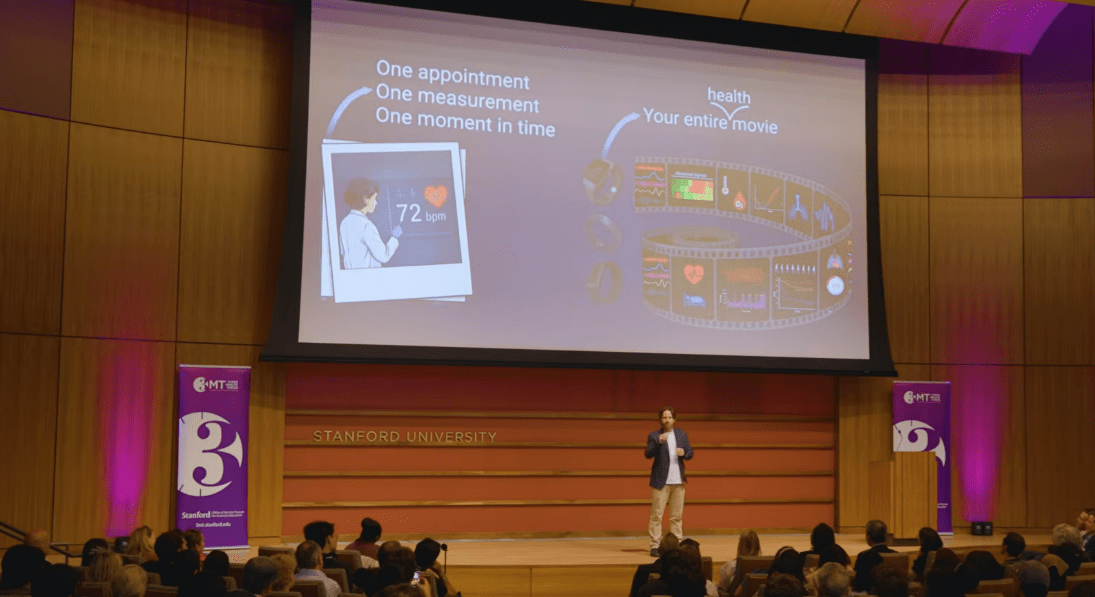
Halfway through the Stanford semester, a student in CS 153 raises her hand and asks the cofounder of a cutting-edge AI image company why he declined to collaborate with Elon Musk’s xAI. The founder carefully responds, mentioning that everyone should be protected by safety precautions. For a moment, the room is silent. Subsequently, 499 additional students begin typing on their laptops.
Indeed, they are now referring to it as AI Coachella.
The most talked-about course at one of the most talked-about universities in the world is CS 153, which is co-taught by Anjney Midha and Michael Abbott on Stanford’s Palo Alto campus. Abbott served as Apple’s vice president of cloud services engineering for many years, while Midha was a general partner at Andreessen Horowitz. Four years ago, the two started the course, but this semester, something changed. The class went from being a campus curiosity to a cultural flashpoint almost immediately after a screenshot of the guest speaker list appeared on social media.
The lineup does appear to have been compiled from a very well-connected Sand Hill Road investor’s contact list. Sam Altman of OpenAI. Jensen Huang of Nvidia. Satya Nadella of Microsoft. Lisa Su of AMD. A White House advisor on AI policy even made it into the lecture hall. As soon as registration opened, all 500 seats were taken. Thousands of people have been silently watching the lectures on YouTube, most likely from dorm rooms at universities with far less well-known guest speakers, while hundreds more ended up on the waitlist.
| Field | Details |
|---|---|
| Course Name | CS 153 |
| Nickname | “AI Coachella” |
| University | Stanford University, Palo Alto, California |
| Co-Instructors | Anjney Midha (former a16z General Partner), Michael Abbott (former Apple VP of Engineering) |
| Course Focus | Frontier AI systems, computing infrastructure, AI startup ecosystem |
| Enrollment | 500 seats; dozens on waitlist |
| Notable Guest Speakers | Sam Altman (OpenAI), Jensen Huang (Nvidia), Satya Nadella (Microsoft), Lisa Su (AMD), Amanda Askell (Anthropic), Sriram Krishnan (White House AI Advisor) |
| Years Running | 4th year |
| Instructors’ Venture Firm | AMP (AI capital + computing capacity) |
| Conflict of Interest Disclosed | Yes — Midha invested in several guest lecturer companies |
| Viral Moment | Guest speaker lineup screenshot went viral on X (Twitter) |
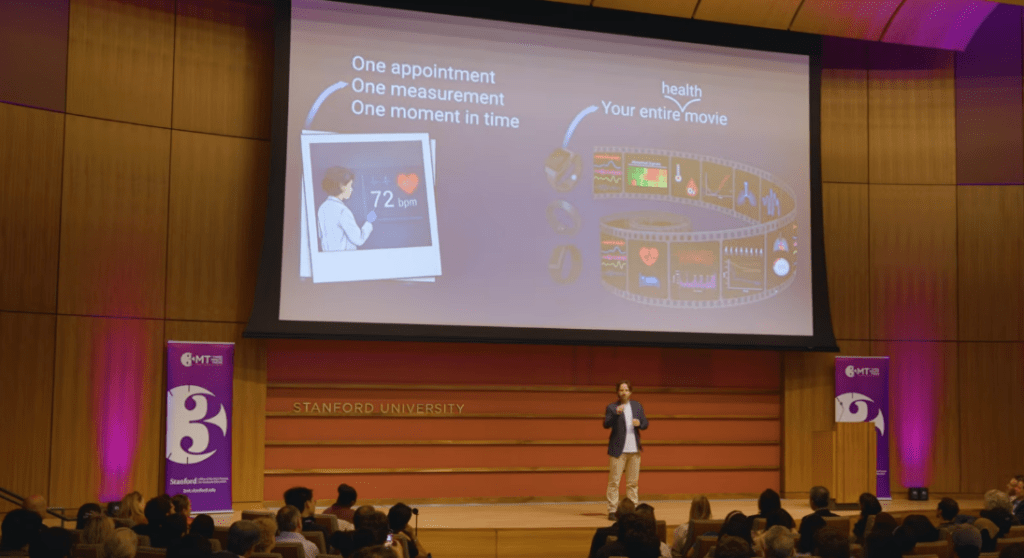
The tension that lies beneath all of this is difficult to ignore. On the one hand, there are students who find real value sitting in a room where they can ask a billionaire a direct question and receive an honest response. Speaking to reporters about her experience, sophomore Mahi Jariwala described asking the cofounder of Black Forest Labs about a failed xAI partnership, a conversation she most likely couldn’t have anywhere else. Junior Darrow Hartman claimed that the course exposed him to like-minded individuals and gave him a high-level perspective on the startup world. One thing, though, both students were open about: CS 153 is their favorite class, which goes hand in hand with the more challenging, quiet coursework that doesn’t appear on anyone’s Twitter feed.
Conversely, some Stanford researchers and faculty have publicly rolled their eyes. Anthropic researcher Jesse Mu referred to the course as “a live podcast series” that costs about $5,000 per unit. On the same day that CS 153 was full, a research fellow in economics posted that his functional analysis class was reduced to three students. The implication was clear and a little awkward.
In a way, Midha’s reaction to all of this was distinctly Silicon Valley. He leaned into the ridicule. He ordered 500 T-shirts printed with the words “I took CS 153 and all I got was AI Coachella,” and he used the metaphor of “red teaming” to frame the online criticism, which in some way made the entire situation seem more reasonable. “That’s product market fit,” he stated, seemingly without irony.
However, contrary to what the backlash implies, students actually learn more in the class. The majority of undergraduate computer science programs treat frontier AI systems as elective reading at best, but this is the focus of the curriculum. Using internal data from his new venture firm, AMP, that showed Nvidia H100 chip prices rising over the previous ninety days, Midha used his first lecture to walk students through the computing infrastructure that actually supports large AI models. Because textbooks take years to write and the chip market can change in a quarter, that type of information is not included in textbooks. Depending on what you believe Stanford is for, that may or may not be a proper education or an expensive industry briefing.
Additionally, there is a different, more intimate thread that permeates the class and doesn’t neatly fit into either the celebration or the criticism. Speaking in front of a slide titled “Anj’s life scaling laws,” Midha allegedly broke down in tears during the first lecture as he discussed the loneliness that can result from pursuing a career in a place like Silicon Valley. He stated that he was too busy to attend the actual Coachella. He discussed depression, losing sight of interpersonal relationships, and how teaching this course helped him get through a truly difficult time. Confessing in front of five hundred undergraduates is uncommon, and it’s possible that different people in the room experienced the moment in different ways. However, it implies that even those who operate the machine occasionally experience the costs associated with doing so.
Whether CS 153 creates better engineers, better founders, or just more networked twenty-year-olds is still up for debate. What is certain is that it captures the essence of what Stanford has evolved into, a place where it is increasingly challenging to distinguish between recruitment and education. At least in part, the reason the guest lecturers attend is because they are reminded of something they have been pursuing ever since they left the room full of aspirational students. In 2026, access may be the most valuable thing a university can provide, which is why the students attend. Everyone benefits from it in some way. It’s probably worth more than five hundred seats and a viral tweet to ask whether that something is wisdom or just a great story to tell at a dinner party.
