

Close Menu
CheraghchiCheraghchi
  • Home
  • Contact
  • Privacy Policy
  • Disclaimer
  • About
  • Terms of Service
  • News
  • Research
  • Trending
What's Hot

The Research Paper That Took Seven Years to Write — and Changed the Field of Non-Malleable Cryptography Forever

June 4, 2026

The Microelectronics Boost: MIT’s New Materials That Consume Zero Energy

June 4, 2026

Why America’s Lead in Theoretical Computer Science Is Being Challenged — and What That Means for National Security

June 4, 2026
  • All
  • Trending
  • News
  • Research
CheraghchiCheraghchi
Subscribe
  • Home
  • Contact
  • Privacy Policy
  • Disclaimer
  • About
  • Terms of Service
  • News
  • Research
  • Trending
CheraghchiCheraghchi
Home » The Microelectronics Boost: MIT’s New Materials That Consume Zero Energy
Research

The Microelectronics Boost: MIT’s New Materials That Consume Zero Energy

Brenda RodriguezBy Brenda RodriguezJune 4, 2026No Comments4 Mins Read
Share Facebook Twitter Pinterest LinkedIn Tumblr Reddit Telegram Email
The Microelectronics Boost, MIT’s New Materials That Consume Zero Energy
Share
Facebook Twitter LinkedIn Pinterest Email

Recently, there has been a noticeable shift in the rate of advancement in chip design. Rethinking how a chip is structured at the most fundamental physical level is something more structural than the typical incremental advancement that the industry celebrates at every conference. What MIT researchers published in December 2025 seems to be precisely that kind of moment—the kind that moves the floor quietly but doesn’t make much of a big deal.

The fundamental issue they were resolving is not brand-new. In traditional chips, the memory and computation components—transistors—are constructed independently and located in different areas of the chip. They are constantly exchanging data. Energy is expended on each journey. At the scale of billions of operations per second, this seemingly insignificant inefficiency adds up to an astounding amount of wasted electricity. This has turned into a true physical design crisis for AI workloads, where the demand for computation is unrelenting and expanding faster than anyone could have imagined.

Under the direction of postdoc Yanjie Shao and professors Jesús del Alamo and Dimitri Antoniadis, the MIT team developed an integration platform that stacks memory components and transistors directly on top of one another on the back end of an existing chip. In theory, it seems simple. In reality, it was very difficult because the conventional method of stacking components necessitates fabrication temperatures that would completely destroy any existing circuitry beneath.

Amorphous indium oxide, which can be deposited at a temperature of about 150 degrees Celsius, was their solution. That is low enough to prevent any damage to current front-end circuits. Roughly the width of ten hydrogen atoms arranged in a row, the layer they work with is only 2 nanometers thick, making it hard to even see. The transistor fails at that scale if there are too many structural flaws. If there are too few, it won’t turn on at all. It takes years to calibrate that balance, which is a laborious process that doesn’t look good in photos.

In the end, they created back-end transistors—some as small as 20 nanometers—that use hafnium-zirconium oxide, a ferroelectric material, to incorporate their own memory layer. According to reports, the transistors outperform cutting-edge devices in terms of switching speed while consuming less power. The results presented at the IEEE International Electron Devices Meeting were sufficiently detailed that the semiconductor community is paying attention, even though it’s possible that not every claimed benchmark will withstand the scrutiny of wider replication. The fact that Samsung Electronics participated in the study implies that it is more than just academic.
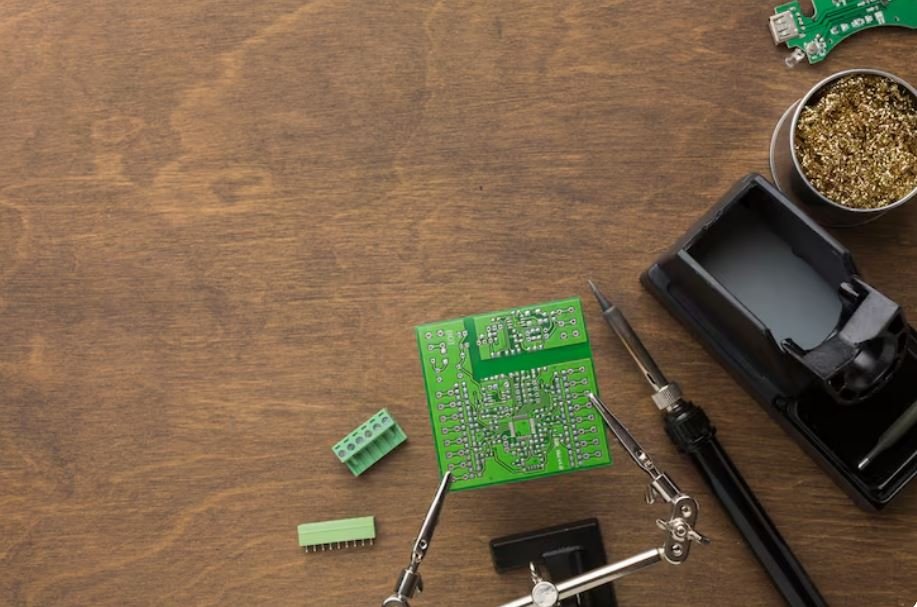
The Microelectronics Boost, MIT’s New Materials That Consume Zero Energy

In short, Shao stated that the current trajectory of AI and data-centric computing’s energy demands is simply unsustainable. That’s not alarmism; data centers already account for a sizable portion of the world’s electricity consumption, and the rise in generative AI has significantly increased that consumption. Every big chip manufacturer is aware of it. The question has always been whether the industry is merely managing decline through incremental improvements, or if there is a significant architectural solution.

There’s a real but cautious feeling that this stacking strategy might be a true component of the solution. It doesn’t resolve every issue. Moving from a research demonstration to volume production at a major fab involves challenges that the papers are unable to adequately address, and the fabrication process is still complicated. However, the materials are authentic, the physics is sound, and the outcomes have undergone peer review.

As this field of materials science develops, it’s difficult to ignore how frequently the pivotal discoveries result from precisely this kind of methodical, unglamorous laboratory work—not from a high-profile product launch, but from someone spending years determining how many oxygen vacancies a 2-nanometer film can withstand. It’s possible that some of the chips of the upcoming ten years can be traced back to that particular, narrow question.

Microelectronics MIT’s New Materials
Share. Facebook Twitter Pinterest LinkedIn Tumblr Email
Previous ArticleWhy America’s Lead in Theoretical Computer Science Is Being Challenged — and What That Means for National Security
Next Article The Research Paper That Took Seven Years to Write — and Changed the Field of Non-Malleable Cryptography Forever
Brenda Rodriguez
  • Website

Brenda Rodriguez is a doctoral research student in computer science at Stanford University who is passionate about mathematics and computing. She studies the intricate relationship between theory, algorithms, and applied mathematics. She regularly delves into the most recent scholarly articles with a sincere love for research literature, deconstructing difficult concepts with accuracy and clarity.Brenda covers the latest advancements in computing and mathematics research as Senior Editor at cheraghchi.info, making cutting-edge concepts accessible to inquisitive minds worldwide. Brenda finds the ideal balance between the demanding academic life and the natural world by recharging outside when she's not buried in research papers or conducting experiments, whether it's hiking trails or just taking in the fresh air.

Related Posts

Research

The Research Paper That Took Seven Years to Write — and Changed the Field of Non-Malleable Cryptography Forever

June 4, 2026
News

Why America’s Lead in Theoretical Computer Science Is Being Challenged — and What That Means for National Security

June 4, 2026
News

The Pencil Beam Breakthrough: MIT’s Laser Innovation for Brain-Targeted Therapies

June 4, 2026
Add A Comment
Leave A Reply Cancel Reply

You must be logged in to post a comment.

Research

The Research Paper That Took Seven Years to Write — and Changed the Field of Non-Malleable Cryptography Forever

Brenda RodriguezJune 4, 2026

To spend seven years honing a single concept requires a certain level of intellectual stubbornness.…

The Microelectronics Boost: MIT’s New Materials That Consume Zero Energy

June 4, 2026

Why America’s Lead in Theoretical Computer Science Is Being Challenged — and What That Means for National Security

June 4, 2026

The Pencil Beam Breakthrough: MIT’s Laser Innovation for Brain-Targeted Therapies

June 4, 2026

The Human-Focused Algorithm: How Stanford is Rebuilding Trust in Artificial Intelligence

June 4, 2026

How a Paper Published in the Journal of Cryptology in 2015 Is Now Shaping the Design of Post-Quantum Security Protocols

June 4, 2026

Embracing the Bot: Why the Hottest Stanford Class Refuses to Ban AI Tools

June 4, 2026
Most Popular

Content to Code – The Quiet Intellectual Civil War Happening Inside Stanford University

June 3, 20262 Views

The Traveling Tournament Problem: How Math Schedules Professional Sports

May 2, 20261 Views

The Research Paper That Took Seven Years to Write — and Changed the Field of Non-Malleable Cryptography Forever

June 4, 20260 Views
About
About

The research published here sits at the boundary of theoretical computer science, coding theory, information theory, and cryptography. The central questions driving this work are mathematical in nature: what are the fundamental limits of reliable communication over noisy channels? How much information can be protected against adversarial tampering? How can high-dimensional sparse signals be recovered from few measurements? How does randomness help — or hinder — efficient computation?
These questions matter both as deep mathematical problems and as foundations for practical systems in data storage, communications, privacy, and security.

Discalimer

This website makes research papers, preprints, and manuscripts accessible for scholarly and instructional purposes. Research findings are subject to revision, correction, and peer review even though every attempt is made to ensure accuracy. The final published versions of preprints and manuscripts may be different from those posted here. For reference and citation purposes, readers should refer to the official published versions. A paper is not endorsed by any journal, conference, or publisher just because it appears on this website.

No Expert Guidance
This website does not provide any legal, financial, investment, medical, or other professional advice. Applications in communications, cryptography, data security, and computer systems are the subject of theoretical and scholarly research discussions. They shouldn’t be used as a guide when making operational, financial, or commercial decisions. A qualified professional should be consulted by readers who need professional advice.

Disclosure of Finances
Under grants NSF CCF-2107345 and NSF CCF-2006455, the US National Science Foundation provided partial funding for research carried out and published through this website. This funding does not constitute a financial stake in any commercial product, business, or technology; rather, it solely supports academic research activities.
This website doesn’t accept sponsored content, run advertisements, or get paid for highlighting, endorsing, or linking to any goods, services, or businesses. Any external links are not endorsements or commercial relationships; they are only included for academic reference and convenience.
Any business or product that may be discussed or cited in research published on this website has no financial stake in the author and is not compensated by them. Any significant changes to this will be made publicly known.

  • Home
  • Contact
  • Privacy Policy
  • Disclaimer
  • About
  • Terms of Service
  • News
  • Research
  • Trending
© 2026 ThemeSphere. Designed by ThemeSphere.

Type above and press Enter to search. Press Esc to cancel.